



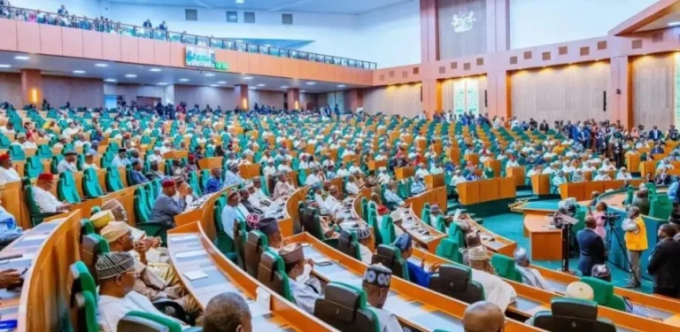
A Federal High Court has ordered the final forfeiture of N150 million linked to one of Nigeria’s longest serving members of the House of Representatives, marking another significant development in the country’s ongoing anti corruption efforts.
The ruling followed an application by the Economic and Financial Crimes Commission (EFCC), which argued that investigations showed the funds were proceeds of unlawful activities. The commission had earlier secured an interim forfeiture order before requesting that the money be permanently forfeited to the Federal Government.
In delivering the judgment, the court held that no individual or organisation came forward with sufficient evidence to establish legitimate ownership of the funds despite the public notice issued after the interim forfeiture order. Based on the evidence presented by the EFCC, the court ruled that the money should be permanently forfeited.
The anti graft agency maintained that its investigation uncovered financial transactions that could not be satisfactorily explained and were suspected to be connected to illicit activities. According to the commission, the evidence before the court met the legal requirements for the final forfeiture of the funds.
The decision represents another milestone in the EFCC’s campaign to recover assets believed to have been acquired through corruption and other financial crimes. The agency has consistently relied on the courts to obtain forfeiture orders where it believes property or funds cannot be lawfully justified.
Although the court’s decision concerns the forfeiture of the money, it does not automatically amount to a criminal conviction against any individual. Under Nigerian law, civil forfeiture proceedings are separate from criminal trials and are aimed at recovering assets suspected to be proceeds of unlawful activities.
Legal analysts say the judgment reinforces the principle that individuals claiming ownership of assets under investigation must provide convincing evidence of their legitimate source. Where such evidence is lacking, the courts may order the assets forfeited to the government in line with existing laws.
The ruling is expected to generate public interest because of its connection to one of the country’s longest serving federal lawmakers. It also highlights the continued use of civil asset recovery as a key tool in Nigeria’s broader fight against corruption, financial misconduct and the misappropriation of public resources.
The EFCC has reaffirmed its commitment to pursuing the recovery of illicit assets and ensuring that individuals found to have benefited from unlawful financial activities are held accountable through the legal process.
SOURCE: DAILY TRUST







Leave a comment