


WASHINGTON/TEHRAN, July 8 The United States launched a new wave of airstrikes against military targets in Iran, dramatically escalating tensions in the Middle East and effectively ending a fragile ceasefire that had briefly raised hopes for renewed diplomacy between Washington and Tehran.
According to U.S. Central Command (CENTCOM), the strikes began late Tuesday and continued into Wednesday, targeting more than 80 military sites across southern Iran. The operation focused on air defense systems, command and control facilities, coastal radar installations, anti ship missile batteries and dozens of vessels operated by Iran’s Islamic Revolutionary Guard Corps (IRGC) near the Strait of Hormuz.
U.S. officials said the operation was carried out in response to Iranian attacks on three commercial oil tankers transiting the Strait of Hormuz, accusing Tehran of violating the terms of a recently brokered memorandum of understanding intended to reduce hostilities and safeguard international shipping.
Iran strongly condemned the strikes, describing them as a violation of its sovereignty and warning that it reserved the right to respond. Iranian state media reported explosions in several southern provinces, while military officials vowed retaliation against what they called continued U.S. aggression.
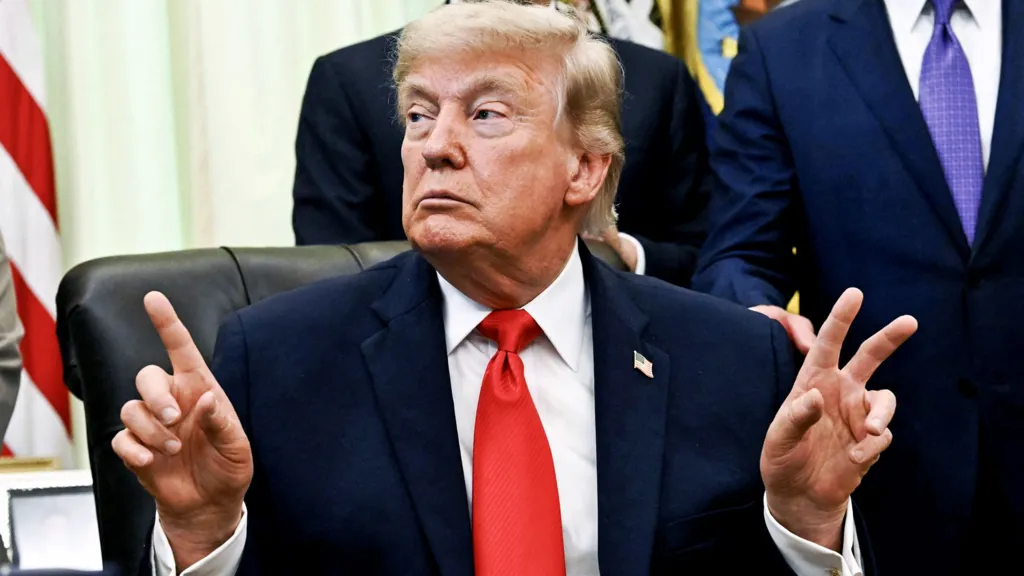
The military action prompted President Donald Trump to declare that the ceasefire agreement with Iran was effectively “over,” saying negotiations had failed to produce meaningful results and accusing Tehran of acting in bad faith.
The collapse of the truce has raised fears of a broader regional conflict, with analysts warning that further military exchanges could threaten stability across the Gulf and disrupt global energy supplies.
The renewed hostilities immediately rattled international markets. Brent crude oil prices surged by more than six percent as investors reacted to concerns over possible disruptions in the Strait of Hormuz, one of the world’s most important oil shipping routes through which nearly one fifth of global oil supplies pass. Stock markets across the United States, Europe and parts of Asia also fell as traders sought safer investments amid growing geopolitical uncertainty.
World leaders have urged restraint, warning that continued escalation risks destabilizing the Middle East and further straining the global economy. Diplomatic efforts are continuing through regional mediators, but prospects for reviving negotiations appear increasingly uncertain following the latest exchange of military action.
The latest strikes mark one of the most significant direct military confrontations between the United States and Iran in recent years, signaling a sharp deterioration in relations at a time when hopes for a diplomatic breakthrough had begun to emerge.
Sources: Reuters And Al Jazeera.









Leave a comment