


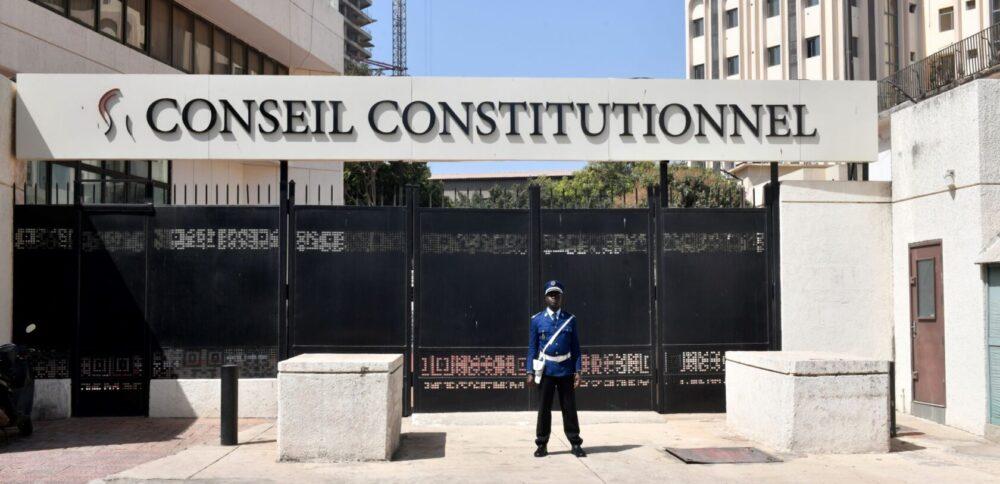
Dakar, July 10 — Senegal’s Constitutional Court has struck down a constitutional amendment approved by parliament last month, ruling that the proposed reforms violated the country’s constitution in a decision that marks a major setback for the governing Pastef party amid an intensifying political dispute at the highest levels of government.
In its ruling issued on Thursday, the court declared that the amendment adopted by the National Assembly on 29 June was “contrary to the Constitution,” effectively nullifying the package of reforms.
Among the proposed changes was a provision that would have prevented a sitting president from simultaneously serving as the leader of a political party. The proposal drew heightened attention after President Bassirou Diomaye Faye announced last week that he intended to establish his own political party.
The reform package was promoted by the ruling Pastef party, headed by National Assembly Speaker and former Prime Minister Ousmane Sonko, whose political alliance with President Faye has unravelled in recent months. Their relationship deteriorated after President Faye dismissed Sonko as prime minister in May, exposing growing divisions within the country’s leadership.
Opposition politicians and constitutional experts had criticised the proposed amendments, arguing that they risked upsetting the balance of power within the executive and legislative branches and could strengthen the influence of the ruling party.
The Constitutional Court said President Faye had requested a review of the parliamentary process to determine whether procedural breaches had occurred that would invalidate the legislation. Following its examination, the court concluded that the amendment did not comply with the provisions of the constitution.
The ruling comes at a sensitive time for Senegal, as the government seeks to restore confidence following the disclosure in 2024 that the country’s public debt figures had been significantly misreported. Analysts say the widening political divide between President Faye and Mr Sonko could complicate efforts to implement economic reforms and reassure international investors.
Reacting to the decision, Mr Sonko said in a post on X that he respected the Constitutional Court’s judgment.
The court’s decision represents one of the most significant legal interventions since the split between the former political allies, reinforcing the judiciary’s role in safeguarding Senegal’s constitutional order as the country navigates a period of political uncertainty.








Leave a comment