


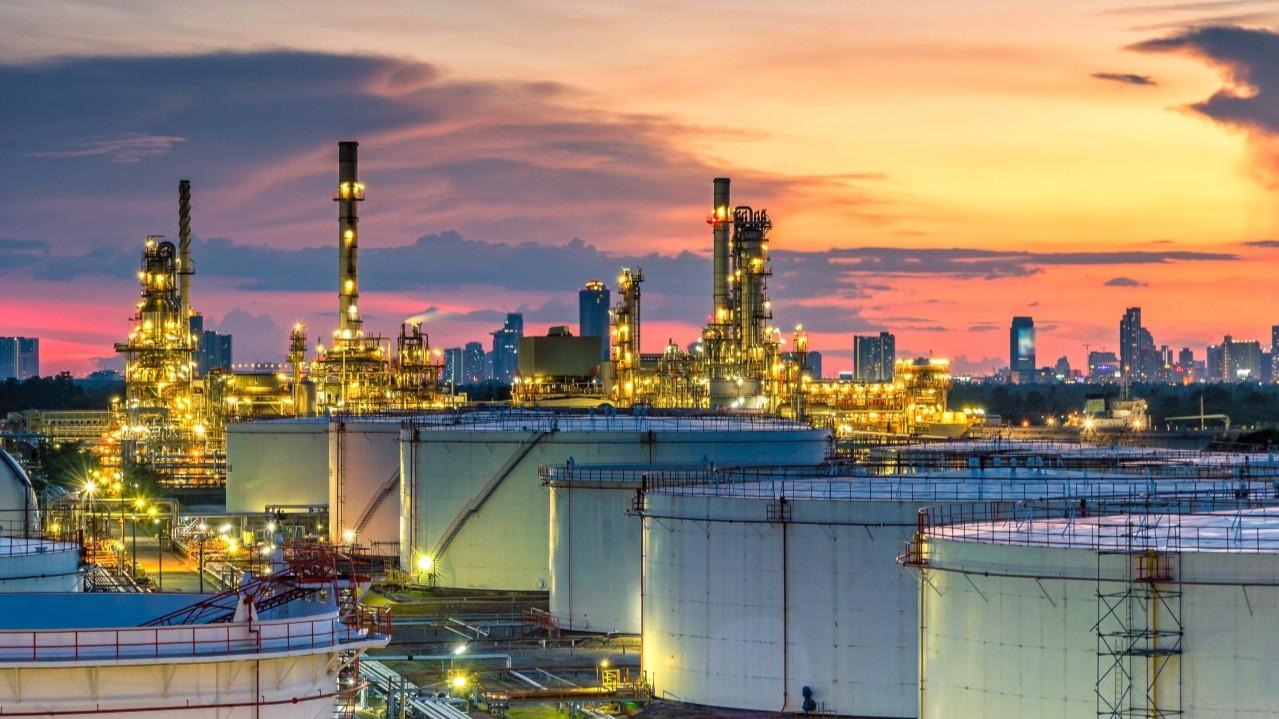
Global financial markets came under renewed pressure on Wednesday after U.S. President Donald Trump declared the interim ceasefire agreement with Iran “over,” triggering a sharp rise in oil prices and a broad selloff in equities as investors braced for a fresh escalation in Middle East tensions. (Reuters)
Brent crude, the international benchmark, climbed more than 6% to nearly $79 a barrel, while U.S. West Texas Intermediate (WTI) crude rose to around $75 a barrel. Although prices remain well below the peaks above $120 per barrel seen during the height of the conflict, analysts warned the latest surge could reignite inflation and slow global economic growth. (Reuters)
The gains reversed weeks of declining oil prices that had been driven by hopes that Washington and Tehran would preserve a memorandum of understanding allowing negotiations and the reopening of the Strait of Hormuz, the strategic waterway through which roughly one fifth of the world’s traded oil passes. (Reuters)
Ceasefire Collapses After Fresh Military Strikes
Speaking on the sidelines of the NATO summit in Ankara, Trump said the memorandum of understanding brokered with Pakistani mediation was effectively finished.
“To me, I think it’s over. I don’t want to deal with them,” Trump said, adding that negotiations with Tehran had become “a waste of time.”
The ceasefire, signed in June, had created a 60 day window for indirect negotiations aimed at reaching a broader agreement on Iran’s nuclear programme, regional security and the reopening of the Strait of Hormuz. However, talks held in Qatar ended without significant progress.
The situation deteriorated after attacks on three commercial tankers in the Strait of Hormuz. In response, the United States launched strikes on more than 80 Iranian targets and revoked a temporary licence that had allowed Iran to continue limited oil exports under the agreement. Iran was given until July 17 to wind down remaining transactions.
Iran retaliated by launching missiles and drones against U.S. military facilities in Bahrain and Kuwait, dramatically raising fears of a wider regional conflict.
Global Markets React
Investors quickly shifted into defensive positions as fears of prolonged instability in the Gulf spread through financial markets.
Dow Jones futures fell 1.3%, Nasdaq futures dropped 1.6%, and S&P 500 futures declined 1%. Major European stock indexes lost around 2%, while Asian markets also weakened sharply. South Korea’s KOSPI fell 5.4%, Japan’s Nikkei 225 dropped 2.1%, although Hong Kong’s Hang Seng bucked the trend with gains of about 3%.
Neil Wilson, a strategist at investment bank Saxo, said the spike in oil prices had renewed fears of stagflation, a combination of rising inflation and slowing economic growth.
“Equity market sentiment is under renewed pressure from a jump in oil prices,” Wilson said, noting that higher energy costs could undermine the global growth outlook.
Why the Strait of Hormuz Matters
The Strait of Hormuz remains one of the world’s most critical energy chokepoints, carrying around 20% of global oil supplies. Any disruption to shipping through the narrow waterway has immediate consequences for oil prices, shipping costs and inflation worldwide. Analysts warned that if military operations intensify or commercial shipping is further disrupted, crude prices could continue to rise, increasing pressure on central banks already battling persistent inflation.
Sources: Reuters, Al Jazeera and CNN.








Leave a comment