


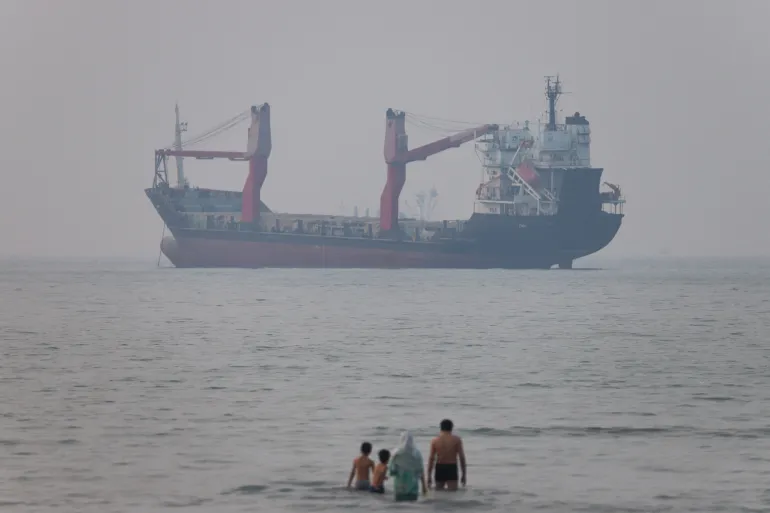
TEHRAN, Iran Iran has warned commercial vessels that fail to follow its designated navigation routes through the Strait of Hormuz that they could face an “immediate and forceful response” from the country’s armed forces, raising fresh concerns over security in one of the world’s most important energy shipping lanes.
The warning was issued on Thursday by Iran’s Khatam al Anbiya Central Headquarters, a day after Qatari mediators reported “positive progress” in indirect negotiations between the United States and Iran aimed at securing a lasting peace agreement.
In a statement carried by Iran’s semi official Tasnim news agency, the military command said any vessel that ignored Iran’s navigation protocols or deviated from approved routes in the Strait of Hormuz would risk military action.
“Any failure to comply with and depart from the designated route or disregard for the navigation protocols of the Islamic Republic of Iran in the Strait of Hormuz will be met with an immediate and forceful response from the armed forces and will endanger the security of the offending vessels,” the statement said.
Iranian officials did not explain what prompted the latest warning. However, it came shortly after the United States Central Command (CENTCOM) hosted a regional security meeting in Bahrain, where participating nations reaffirmed their commitment to maintaining the free flow of commerce through the strategic waterway.
Responding to the meeting, Iran’s Deputy Foreign Minister Kazem Gharibabadi criticized the US led initiative, arguing that regional security should be managed by countries in the Gulf rather than external powers.
In a statement posted on X, Gharibabadi said lasting security would only be achieved through an end to foreign intervention, respect for national sovereignty, and recognition of changing geopolitical realities rather than under what he described as the military umbrella of the United States.
The Strait of Hormuz remains one of the world’s most strategically important maritime corridors, carrying around one fifth of global oil and liquefied natural gas shipments before the US Israel conflict with Iran began in late February. The waterway has become a central issue in ongoing negotiations between Washington and Tehran as both sides attempt to transform their fragile ceasefire into a more durable agreement.
Although Iran agreed in a memorandum of understanding signed with the United States on June 17 to make its best efforts to facilitate the safe passage of commercial vessels, Tehran has continued to insist that ships follow routes it designates, particularly those closer to the Iranian coastline.
According to shipping intelligence platform MarineTraffic, at least 49 attacks involving commercial vessels have been recorded in or around the Strait of Hormuz since the conflict began on February 28. Several of those incidents, including drone attacks on a Singapore flagged cargo ship and a Panama flagged merchant vessel, have been attributed to Iran by maritime monitoring organizations.
Shipping activity through the strait has gradually increased since the signing of the June 17 agreement but remains well below pre conflict levels. MarineTraffic data showed that 45 vessels transited the waterway on Wednesday, compared with 34 the previous day. Before the conflict, the strait typically handled about 130 vessel crossings each day.
Global energy markets reacted cautiously to the developments. Brent crude futures remained relatively stable in early Asian trading on Friday after briefly falling below 71 dollars per barrel following reports of progress in the Doha negotiations. By 02:30 GMT, Brent crude for August delivery was trading at approximately 72.07 dollars per barrel.
The latest warning underscores the continuing tensions surrounding the Strait of Hormuz, where security concerns remain closely tied to diplomatic efforts between Iran and the United States. Any disruption to shipping through the narrow waterway could have significant consequences for global energy supplies and international trade.
Source: John Power Al Jazeera








Leave a comment