


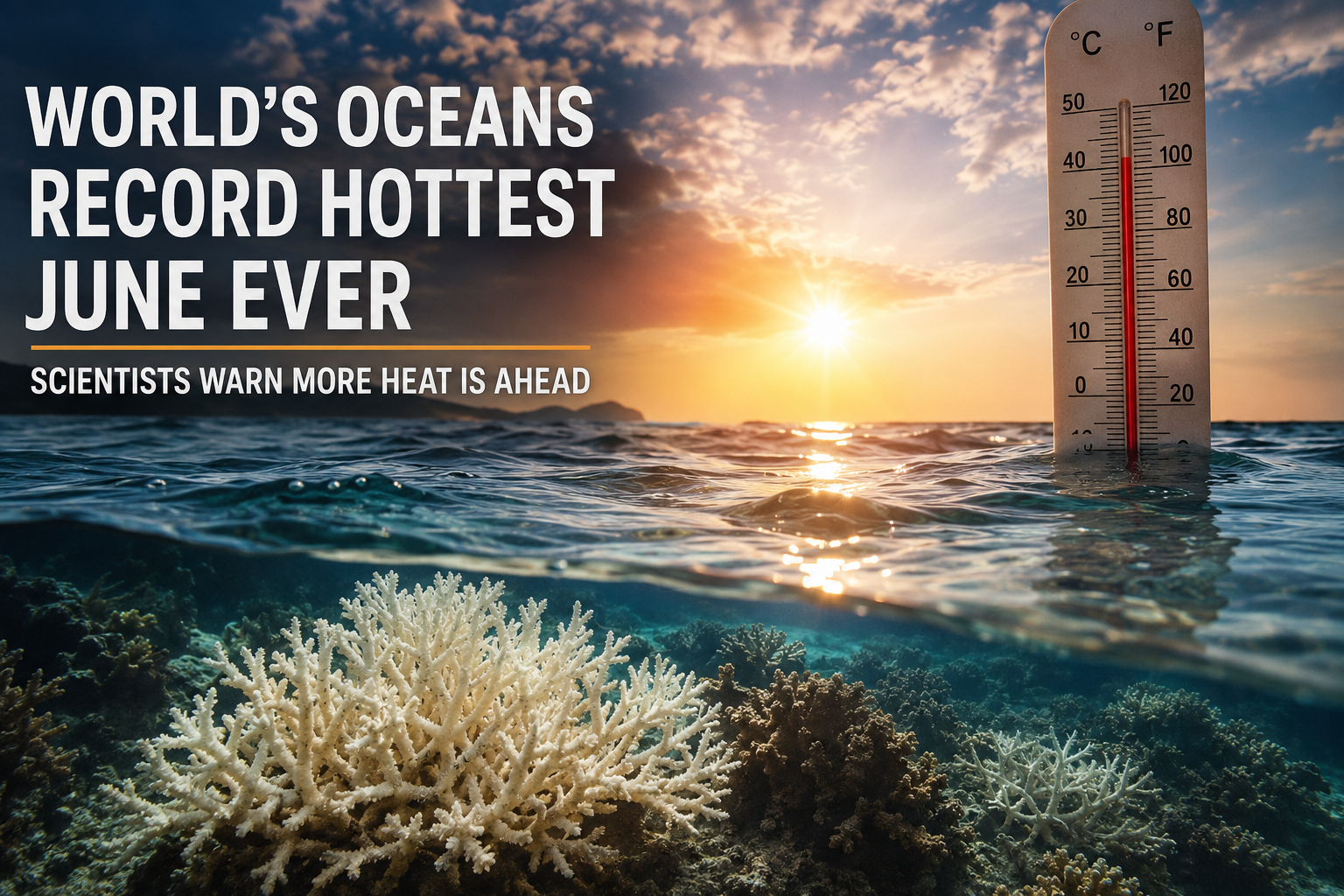
The world’s oceans recorded their hottest June ever, with scientists warning that temperatures could climb even higher in the coming months as the combined effects of climate change and a developing El Niño intensify global warming.
According to the European Union’s Copernicus Marine Service, global sea surface temperatures reached a record average of 21.0 degrees Celsius (69.8 degrees Fahrenheit) in June, surpassing previous records set in 2023 and 2024.
The agency said the first half of 2026 was marked by persistently elevated sea surface temperatures and widespread marine heatwaves affecting much of the world’s oceans.
Marine heatwaves expanded steadily during the period, eventually impacting about 82 percent of the global ocean, according to Simon van Gennip, lead oceanographer at the Copernicus Marine Service.
He said the Mediterranean, the central North Atlantic, and the equatorial Pacific were among the regions experiencing the most intense warming, reflecting sustained thermal stress across the oceans.
Scientists also warned that the emergence of a potentially strong El Niño weather pattern could push ocean and atmospheric temperatures even higher through the rest of 2026 and into next year.
Carlo Buontempo, director of the Copernicus Climate Change Service, said current conditions may signal the beginning of another period of unprecedented warmth, adding that more temperature records are likely to be broken in the coming months.
El Niño is characterised by unusually warm waters in parts of the Pacific Ocean, which release additional heat into the atmosphere and alter global weather patterns. The phenomenon is associated with increased risks of floods in parts of South America, drought across sections of Africa, and wildfires in Australia.
Scientists noted that while 2024 became the hottest year on record during the previous El Niño event, 2026 could rank among the warmest years ever observed if the current warming trend continues.
The findings come weeks after a major United Nations scientific assessment warned that the world’s oceans are facing a deepening crisis as sea temperatures and sea levels continue to rise at accelerating rates.
Oceans play a critical role in regulating Earth’s climate by absorbing about 90 percent of the excess heat generated by greenhouse gas emissions. Rising ocean temperatures also increase atmospheric moisture, fueling stronger tropical cyclones and heavier rainfall, while accelerating sea level rise through the thermal expansion of seawater.
Prolonged marine heatwaves also threaten coral reefs, causing widespread coral bleaching and increasing the risk of long term ecosystem damage.
Source: Al Jazeera









Leave a comment