


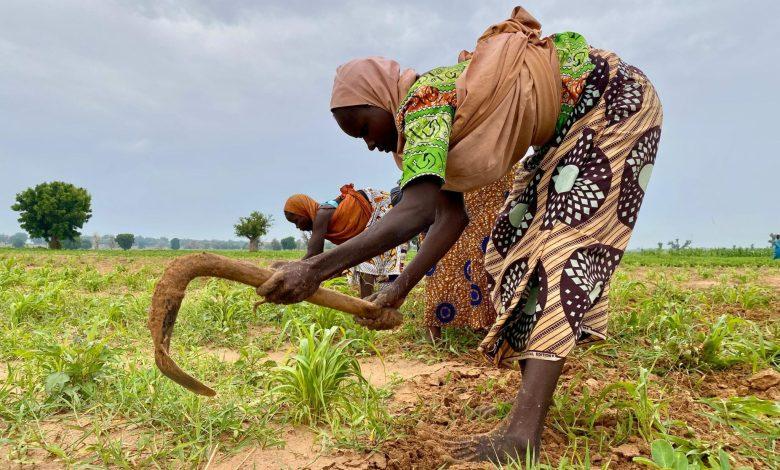
Hundreds of farmers have returned to the abandoned community of Kumalia in Borno State after armed groups banned farming across parts of northern Borno, forcing families to seek alternative land despite the absence of government presence or security.
Kumalia, located in Monguno Local Government Area, was largely deserted in 2016 following attacks by Boko Haram insurgents. Although the government never officially reopened the community, more than 100 farmers have now relocated there, building temporary shelters from sticks and dry grass to cultivate crops during the current farming season.
Residents say the decision followed warnings issued earlier this year by members of the Islamic State West Africa Province (ISWAP), who reportedly ordered farmers in several communities to stop cultivating their land or face deadly consequences.
According to local farmers, the warnings were first delivered in February to people preparing their fields in communities around Kartari, Cross Kauwa, Monguno, and other parts of northern Borno. Community leaders later relayed the message to neighbouring settlements.
Farmers who wished to continue farming were reportedly instructed to relocate permanently with their families into territories controlled by the armed group and cultivate there while paying levies. Many initially believed the demand was another form of extortion, as farmers in the region have previously paid large sums for access to farmland. However, attempts to negotiate access reportedly failed in many communities.
As a result, families began searching for safer places to farm. While some moved toward the Lake Chad region, others chose to return to abandoned settlements such as Kumalia.
Many women also joined the relocation, travelling with their children while leaving others behind with relatives in safer communities. Although Kumalia has access to drinking water, it lacks schools, healthcare facilities, and any visible government or security presence.
Across Borno State, the restrictions on farming have significantly disrupted rural livelihoods. Some families have abandoned cultivation altogether, while others now farm only within areas protected by military positions. Many have accepted the risks of returning to abandoned communities in the hope of securing a harvest.
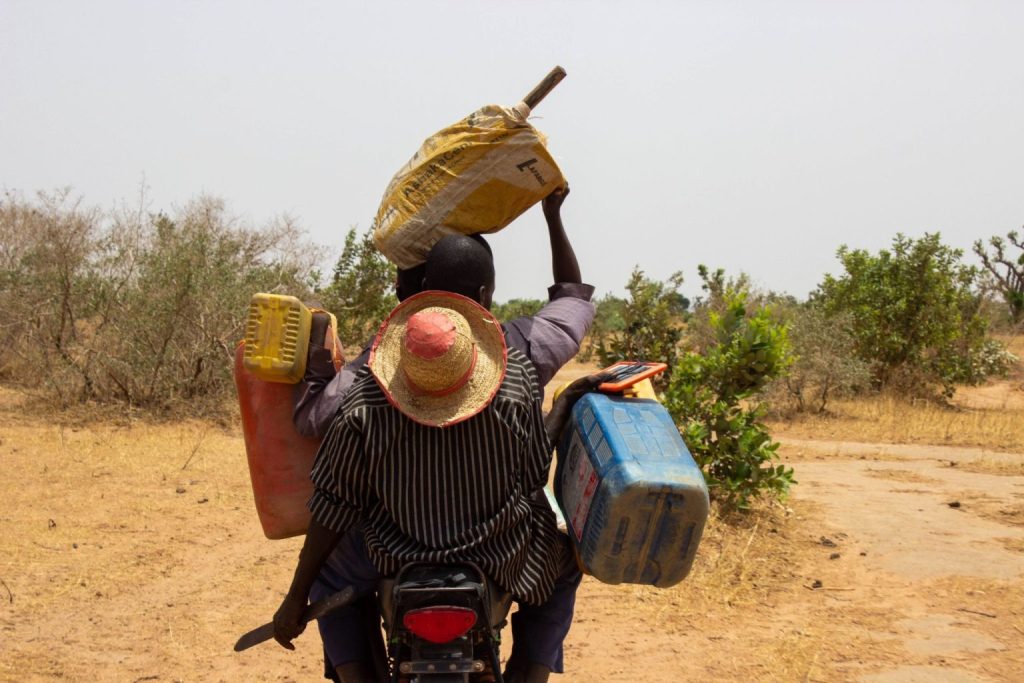
A family riding to their farm on a motorcycle in rural Gombe in 2024. The farming restrictions are also raising concerns over food security across northeastern Nigeria. Agriculture remains the primary source of livelihood for most rural households, and reduced cultivation is expected to affect food production, market supplies, and food prices.File: A family riding to their farm on a motorcycle in rural Gombe in 2024.
Food security assessments indicate that millions of people across northern Nigeria are expected to require humanitarian assistance during the annual lean season because of conflict, displacement, and reduced agricultural production. Humanitarian agencies have also warned that millions of children are at risk of acute malnutrition due to the continuing crisis.
Residents in several communities say the farming ban has been enforced through violence.
In Lassa, Askira Uba Local Government Area, suspected armed group members reportedly attacked and flogged women working on their farms, warning that cultivation was prohibited after claiming ownership of the land.
In Auno, Konduga Local Government Area, residents reported that a farmer was killed while working on his farmland earlier in the season. On June 20, at least 15 farmers were also reportedly killed near Kartari while cultivating their fields. The victims were said to have come from Monguno, Kukawa, Baga, and Cross Kauwa.
Some communities have reportedly been allowed to cultivate after paying levies, leading residents to believe that the restrictions vary between commanders rather than reflecting a single policy.
The return to Kumalia illustrates the difficult choices many families now face. Reaching the settlement reportedly requires about five hours of walking, with transportation limited to push carts. Families are living in makeshift shelters intended to last only until the harvest season.
Despite the hardships, many residents believe remaining in town without access to farmland would leave them with no means of survival.
Humanitarian observers warn that communities such as Kumalia also face additional risks because they are located in remote areas with little government presence. Civilians farming in such locations may be exposed to attacks by armed groups and could also face dangers during military operations in areas where distinguishing between civilians and insurgents can be difficult.
The continued displacement of farming communities and restrictions on agricultural activities are expected to deepen the humanitarian and food security crisis across northeastern Nigeria unless conditions improve and safe access to farmland is restored.








Leave a comment