


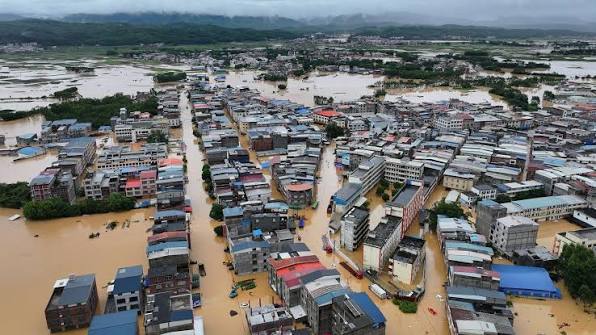
At least 17 people have died and tens of thousands have been displaced after Typhoon Maysak unleashed widespread flooding, violent thunderstorms and tornadoes across southern and central China, according to Chinese authorities.
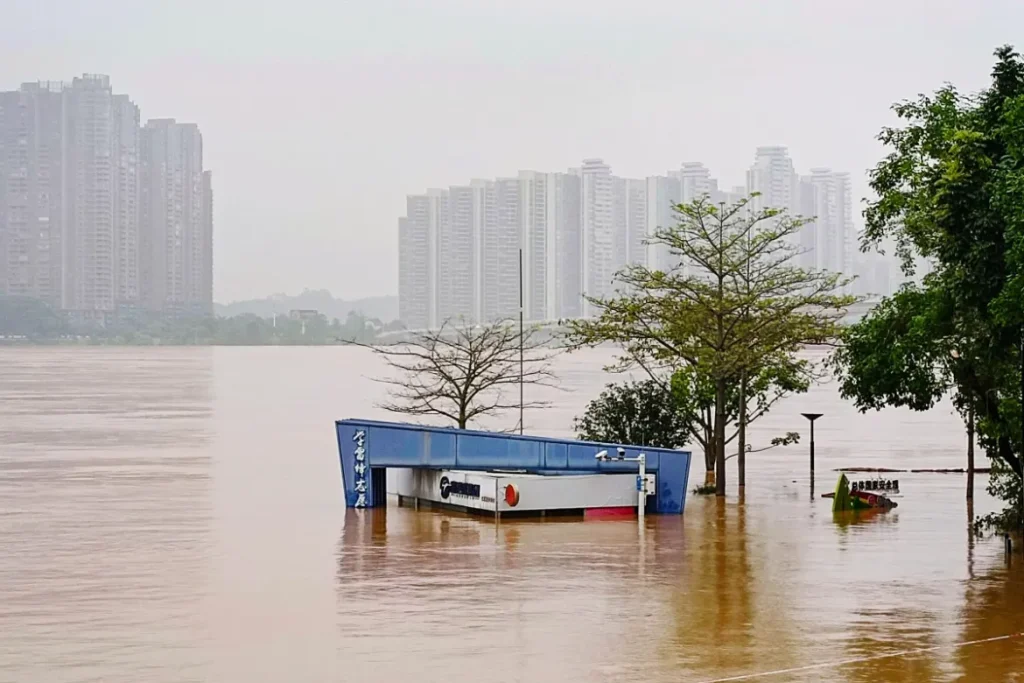
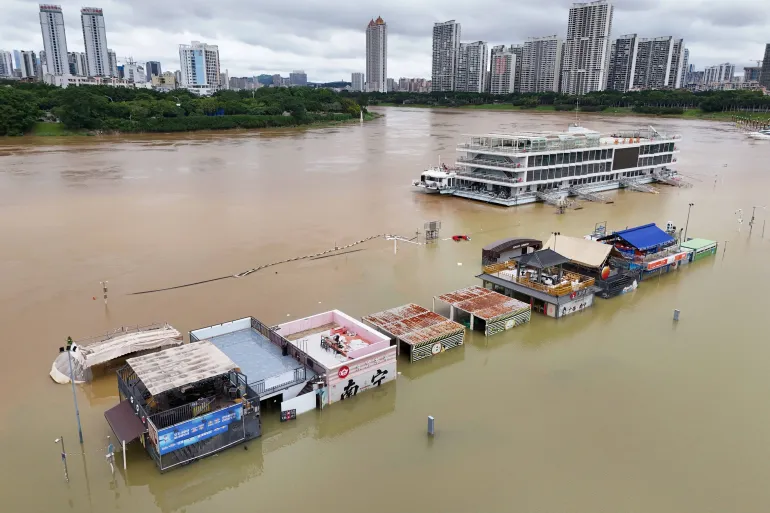
The storm, which made landfall over the weekend, brought torrential rain to the southern Guangxi Zhuang Autonomous Region, inundating towns and villages, while severe weather linked to the typhoon also spawned tornadoes hundreds of kilometres away in Hubei province.
Chinese state media reported that more than 60,000 people had been evacuated, with at least 90,000 residents affected by flooding as rivers burst their banks and low-lying communities were submerged.
Videos shared on Chinese social media showed neighbourhoods under water, residents stranded on rooftops awaiting rescue, and emergency crews using inflatable boats to reach trapped families.
The regional capital, Nanning, and surrounding communities were among the hardest hit after days of relentless rainfall caused rivers to overflow, damaged embankments and breached sections of flood-control infrastructure.
Authorities warned that persistent heavy rain could continue to complicate rescue operations and increase the risk of landslides and flash floods.
President Xi Jinping ordered what state media described as “all-out” rescue and relief efforts, instructing local governments to prioritise search-and-rescue operations, provide medical treatment to the injured, relocate displaced residents and strengthen disaster prevention measures.
Maysak is the first typhoon to make landfall in China during the 2026 typhoon season.
According to China’s National Meteorological Centre, several parts of Guangxi received between 100 millimetres and 400 millimetres of rainfall since the weekend, while isolated areas recorded more than 900 millimetres, overwhelming drainage systems and triggering widespread flooding.
The weather agency said heavy rainfall is expected to continue across parts of southern China, prompting the suspension of some railway services and warnings for residents to avoid flood-prone areas.
Floodwaters also created an unusual public safety concern after local authorities in Hengzhou reported that snakes from breeding farms, along with wild snakes, had been swept away into residential neighbourhoods.
Meanwhile, at least two tornadoes struck Hubei province after cold air moving south collided with the warm, moisture-laden air circulating around Typhoon Maysak. Videos posted online showed destructive winds damaging buildings and uprooting trees in the cities of Ezhou and Huanggang.
Meteorologists said tornadoes remain relatively uncommon in the region, although severe convective weather associated with tropical systems can occasionally produce them.
China’s emergency management authorities have deployed additional rescue personnel, disaster relief supplies and engineering teams to affected areas as officials monitor river levels and reinforce vulnerable flood-control structures.
Forecasters also warned that another powerful storm, Super Typhoon Bavi, is expected to approach China’s eastern coastline later this week, raising concerns that already saturated areas could face renewed flooding and further disruptions.
China is regularly affected by typhoons during the summer months, particularly along its southern and eastern coastlines. Scientists say climate change is contributing to more frequent and intense extreme rainfall events, increasing the likelihood of severe flooding, landslides and other weather-related disasters.
Source: Reuters And Aljazeera









Leave a comment