


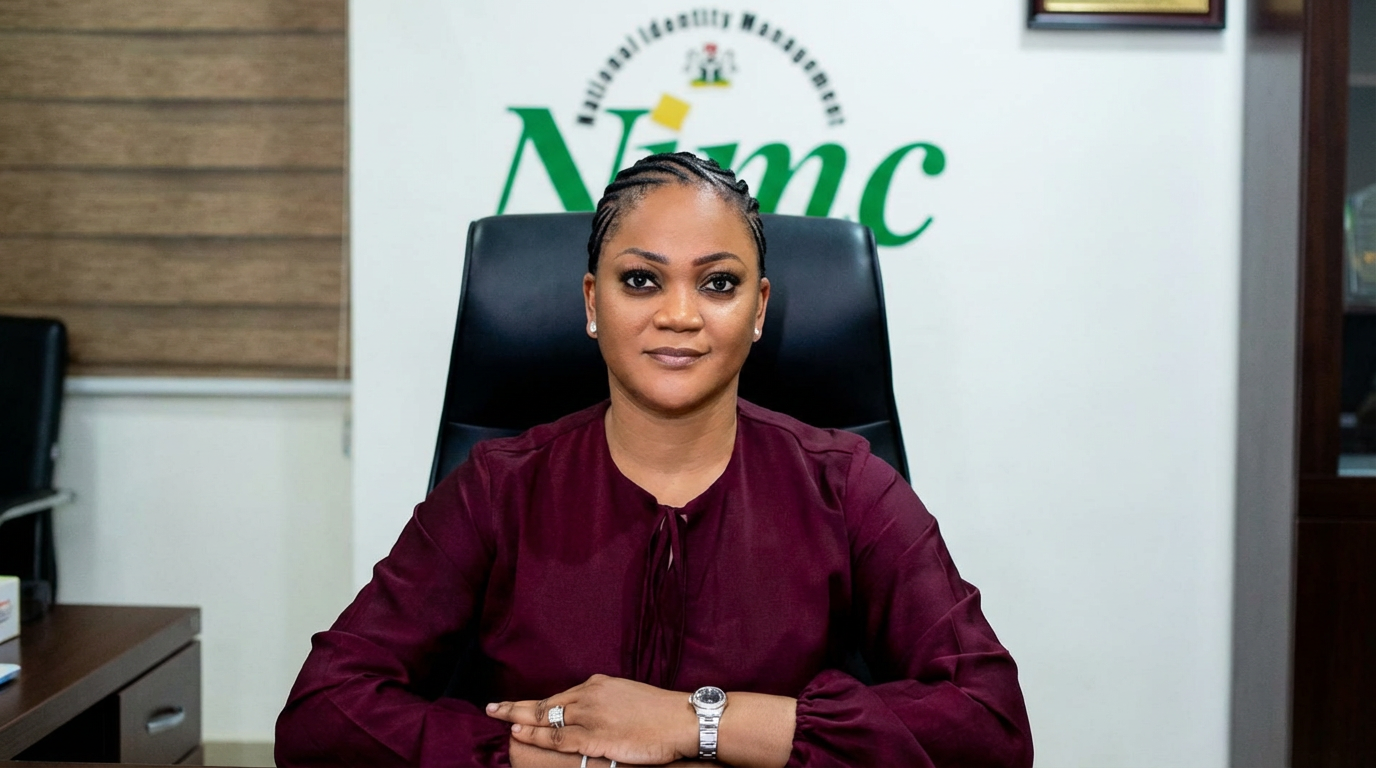
The National Identity Management Commission (NIMC) has announced that more than 136 million Nigerians and legal residents have been enrolled in the National Identity Database (NIDB), marking a significant milestone in the country’s digital identity programme.
The Director-General of NIMC, Abisoye Coker-Odusote, disclosed the development during a courtesy visit to the Federal Ministry of Budget and Economic Planning as part of ongoing stakeholder engagements on the implementation of the newly enacted NIMC Act.
According to the commission, the new legislation replaces the 2007 Act and introduces a modern legal framework aimed at strengthening Nigeria’s digital identity ecosystem. The Act positions the National Identification Number (NIN) as the country’s primary identity credential under the “One Person, One Identity” policy, while also enhancing data protection, cybersecurity, and digital identity management.
Coker-Odusote reaffirmed the Federal Government’s commitment to ensuring that all Nigerians and legal residents are enrolled and issued NINs as quickly as possible. She also expressed NIMC’s readiness to collaborate with the Ministry of Budget and Economic Planning in leveraging the NIN to improve national planning, economic development, and public service delivery.
She commended the Minister of Budget and Economic Planning, Abubakar Atiku Bagudu, for his support in advancing the administration’s digital identity agenda.
In his remarks, Bagudu described the NIMC Act 2026 as a landmark reform that will strengthen Nigeria’s identity management system and support national development. He noted that the legislation provides a solid legal foundation for a secure, reliable, and inclusive identity framework.
The minister stressed that the success of the new law would depend on its effective implementation and called for closer collaboration among federal, state, and local governments to eliminate duplicate identity databases across public institutions.
He added that the National Identification Number should serve as Nigeria’s single, universally accepted means of identification, enabling efficient service delivery, improved governance, and better national planning.
Source: The Guardian News









Leave a comment