


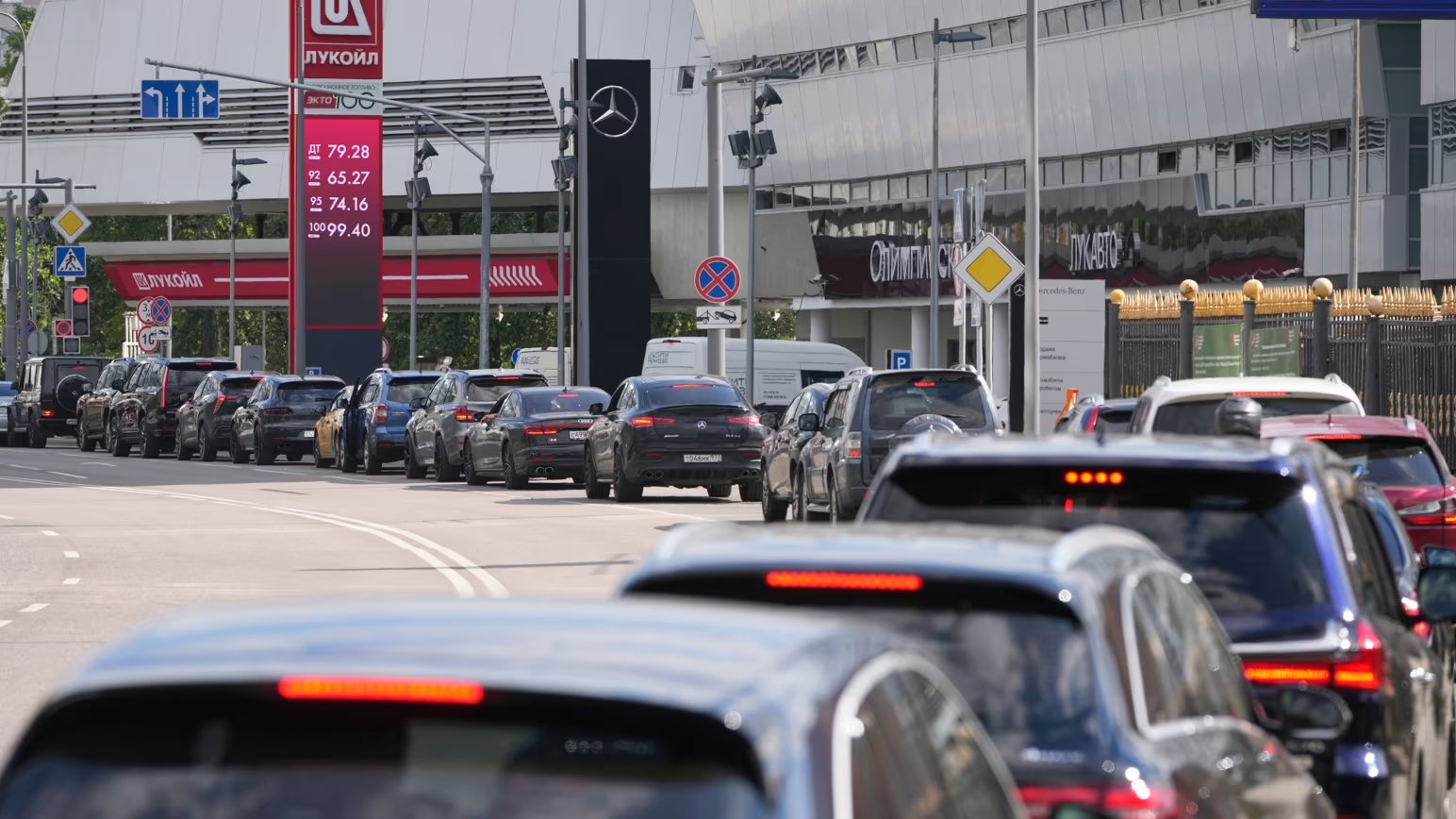
Russia is facing its most severe fuel shortage in years as Ukrainian drone strikes on oil refineries continue to disrupt gasoline production across the country. According to a CNN analysis, fuel supply problems have spread to nearly every one of Russia’s 83 internationally recognized regions, forcing many gas stations to introduce rationing while authorities scramble to contain the crisis.
The shortages, which first intensified in Russian controlled Crimea, have now spread across Russia’s 11 time zones, raising concerns about inflation, public unrest and the country’s ability to sustain its war effort.
Fuel Shortages Spread Nationwide
CNN’s review of official statements from regional governors, mayors and local media found that more than 50 Russian regions have formally acknowledged fuel supply disruptions, while unofficial reports suggest shortages are affecting almost every part of the country.
Several regions, including Irkutsk and Transbaikal in eastern Russia, have declared a state of heightened alert, one level below a state of emergency.
The crisis in Crimea became so severe that authorities imposed a state of emergency and temporarily banned fuel sales to ordinary citizens on June 21.
Putin Tries to Reassure Russians
Russian President Vladimir Putin sought to calm public concerns during a televised interview on Sunday, acknowledging the shortages but insisting they remained manageable.
“We are currently seeing certain shortages, although they are not critical.”
However, Putin also admitted that one of Russia’s most urgent priorities is to rapidly expand production of air defense systems, an acknowledgment of the increasing effectiveness of Ukraine’s drone campaign against Russian infrastructure.
Drone Attacks Take a Growing Toll
While Russia experienced fuel shortages last year, analysts say the current situation is significantly more serious.
Sumit Ritolia, lead analyst for refining supply and modeling at commodities intelligence firm Kpler, said the difference lies in the scale and persistence of Ukraine’s attacks.
According to Ritolia, Russian gasoline production is currently running at around 20 percent below domestic demand, while refinery activity has fallen to multi year lows.
Sergey Vakulenko, a senior fellow at the Carnegie Russia Eurasia Center and a former executive in Russia’s oil and gas industry, said Ukraine has dramatically increased both the frequency of attacks and the number of drones deployed.
He warned that Russia’s oil industry is being pushed to its limits as repair crews struggle to restore damaged facilities before new attacks occur.
Long Lines and Growing Public Frustration
The shortages are beginning to affect daily life across Russia.
Many gas stations have introduced limits on fuel purchases, while websites tracking fuel availability have emerged to help motorists locate stations with gasoline.
Videos circulating on social media show drivers arguing while waiting in lengthy queues, with some stations experiencing lines lasting several hours.
Authorities in several regions have also banned customers from filling large fuel containers in an effort to prevent hoarding and black market sales.
In Irkutsk, police arrested several individuals accused of illegally reselling gasoline at prices reportedly four times higher than the national average.
Moscow Also Feeling the Pressure
Even the Russian capital is beginning to experience supply disruptions.
Drivers in Moscow have reported spending hours searching for gasoline, while some stations have imposed unofficial purchase limits.
The situation worsened after Ukraine launched its largest drone attack on Moscow since the war began, striking the Kapotnya oil refinery for the second time within a week.
One intercepted drone reportedly caused a massive explosion that blew the roof off a fuel storage tank, highlighting the growing vulnerability of Russia’s energy infrastructure.
Although some station attendants insist deliveries continue as scheduled, analysts believe repeated attacks on refineries surrounding Moscow are beginning to affect supplies reaching the capital.
Economic Pressure Mounts
The fuel shortages come at a particularly difficult time for Russia’s economy.
Summer is traditionally the country’s peak driving season, increasing demand for gasoline just as refinery production has fallen sharply.
The shortages are also contributing to inflation, forcing Russia’s central bank to keep interest rates elevated despite signs of slowing economic growth.
Analysts warn that allowing lower quality gasoline onto the market, an option reportedly under consideration by Russian authorities, could damage modern vehicles while doing little to solve the underlying supply problem.
Meanwhile, Russia has reportedly begun importing gasoline from India, an unusual move for one of the world’s largest energy producers and a sign of mounting pressure on domestic supplies.
Ukraine’s Strategy Appears to Be Working
Military and economic analysts say Ukraine’s sustained drone campaign is placing increasing strain on Russia’s economy by targeting one of its most important industries.
Repeated attacks on oil refineries have reduced fuel production, increased repair costs, fueled inflation and tested public patience.
Although the Russian government is attempting to stabilize supplies through refinery repairs, possible export restrictions and increased imports, experts warn those measures may only provide temporary relief if Ukrainian strikes continue at their current pace.
With Russia’s economy slowing, defense spending continuing to rise and oil revenues under pressure, analysts believe the country’s options are becoming increasingly limited as the conflict enters another phase of escalation.
Source: CNN








Leave a comment