


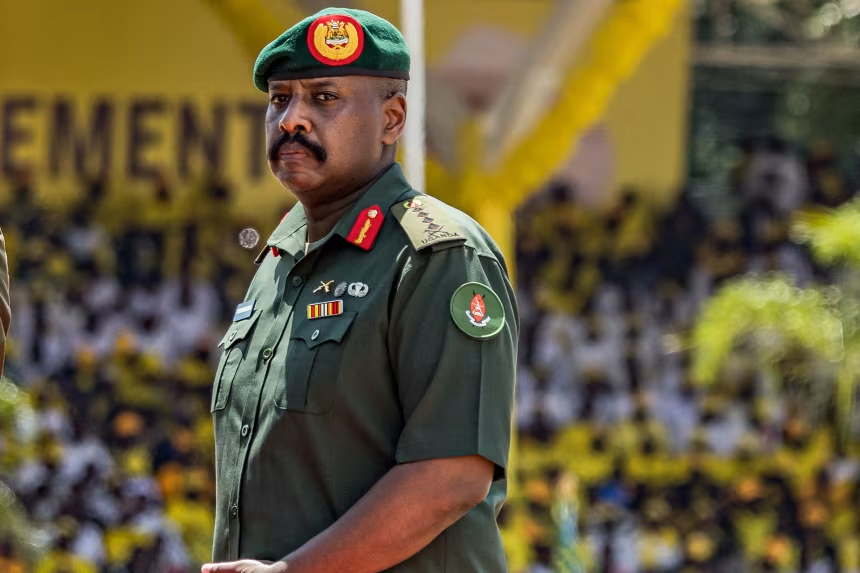
KAMPALA, Uganda (Reuters) Uganda’s military chief, General Muhoozi Kainerugaba, who is also the son of President Yoweri Museveni, announced on Sunday that he had ordered the closure of two of the country’s leading media organizations, declaring that he does “not believe in a free press.”
In a series of posts on X, Kainerugaba said Daily Monitor, Uganda’s largest independent newspaper, and NTV Uganda, one of the country’s biggest private television broadcasters, would remain closed until he personally authorized their reopening.
“In Uganda, I do not believe in a free press. The press should be guided by cadres of the revolution,” Kainerugaba wrote.
He did not provide specific reasons for ordering the shutdown.
Both media outlets are owned by Nation Media Group (NMG), a Kenyan based media company listed on the Nairobi Securities Exchange.
According to the Daily Monitor, military personnel were deployed to NMG’s headquarters in the capital, Kampala, where staff members were reportedly prevented from entering or leaving the premises.
As of Sunday morning, NTV Uganda had gone off the air, while other NMG owned television and radio stations in the country were also reported to be off air.
Ugandan government spokesperson Alan Kasujja did not immediately respond to Reuters’ request for comment.
Meanwhile, Susan Nsibirwa, Managing Director of Nation Media Group Uganda, said she was unable to provide an immediate comment on the situation.
General Kainerugaba, who has frequently been mentioned as a possible successor to his 81 year old father, President Museveni, is known for making controversial statements on social media. In the past, he has drawn criticism for posts that included threats against opposition leader Bobi Wine.
The latest move has raised fresh concerns about media freedom in Uganda, where press organizations have long reported facing political pressure and government restrictions.
The country has previously witnessed similar actions against independent media. In 2013, President Museveni’s government ordered the closure of the Daily Monitor for ten days following its publication of reports concerning presidential succession.
The developments are expected to intensify scrutiny of Uganda’s record on press freedom as the country approaches future political transitions.
Source: CNN by Reuters






Leave a comment