


The European Union has dismissed suggestions that it should delay or suspend the implementation of its new biometric border control system, insisting that preparations remain on course despite operational concerns at several border crossing points.
European authorities acknowledged that about 20 locations across the bloc have been identified as “difficult spots” where infrastructure, traffic flow, or logistical challenges could complicate the rollout of the Entry/Exit System (EES). However, officials maintained that these issues are being addressed and do not warrant postponing the project.
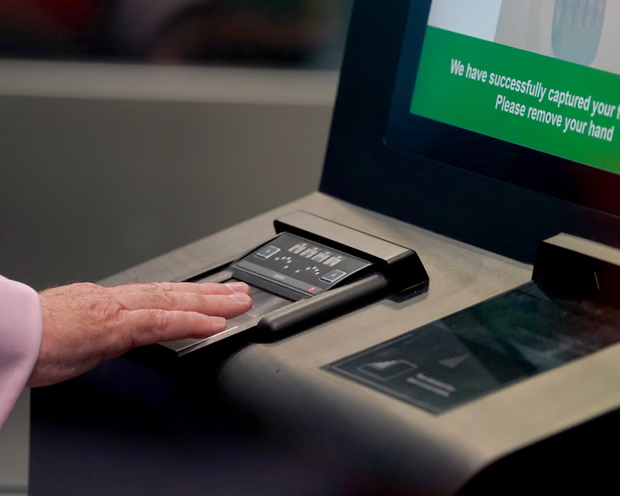
The Entry/Exit System is designed to modernise border management by replacing the traditional passport stamping process for non EU travellers. Under the new system, visitors from non EU countries will have their biometric information, including fingerprints and facial images, digitally recorded each time they enter or leave the Schengen Area.
EU officials believe the technology will significantly strengthen border security by helping authorities detect individuals who overstay their visas, combat identity fraud, and improve the efficiency of immigration checks. The system is also expected to provide more accurate records of travellers moving in and out of participating countries.
While some member states have raised concerns over readiness at busy airports, seaports, and land border crossings, the European Commission stressed that extensive planning has been carried out to ensure a smooth implementation. Officials noted that temporary operational difficulties are common with large scale digital projects and should not be interpreted as a reason to halt progress.
The identified “difficult spots” are believed to include major transport hubs where high passenger volumes and limited space could slow down the collection of biometric data during the initial stages of deployment. Authorities are working closely with national governments, border agencies, and transport operators to improve infrastructure, install additional equipment, and train personnel before the system becomes fully operational.
Industry stakeholders, including airport operators and transport companies, have previously expressed concerns that the introduction of biometric checks could initially lead to longer waiting times, especially during peak travel periods. Nevertheless, EU officials argue that once fully integrated, the digital system will streamline border procedures and reduce administrative burdens in the long term.
The Entry/Exit System forms part of the European Union’s broader strategy to strengthen migration management and enhance security across the Schengen zone. It also serves as a foundation for the upcoming European Travel Information and Authorisation System (ETIAS), which will require visa exempt travellers from many countries to obtain travel authorisation before entering most European destinations.
European authorities reiterated that member states remain committed to completing the final stages of implementation while resolving outstanding technical and operational issues. Rather than delaying the project, the EU plans to continue working with affected countries to ensure that the system is introduced successfully without compromising border security.
The decision signals the bloc’s determination to move forward with one of its most significant border management reforms in recent years, despite the challenges associated with deploying advanced biometric technology across multiple international entry points.
SOURCE: THE GUARDIAN







Leave a comment